Mediator's craft
The Five Whys of Dispute
You're Probably Solving the Wrong Problem
- Keep asking why
- Positions hide needs
- Name the history

I spent over thirty years in the music industry before I became a mediator. I negotiated deals, I managed artists, I co-founded a digital distribution company. I sat in a lot of rooms where a lot of money was on the table, and I watched smart people blow up good opportunities over things that, in retrospect, had almost nothing to do with what they said they were fighting about.
I just didn’t have the language for it then. I do now.
The Five Whys technique comes from manufacturing, specifically Toyota’s production system, where engineers were taught that when something breaks, you don’t fix the part that broke. You ask why it broke. And then why that happened. And you keep going until you find the thing that actually caused the failure, which is almost never the thing you first saw.
It’s a deceptively simple discipline. Most of us stop at the first why. Or we never ask it at all.
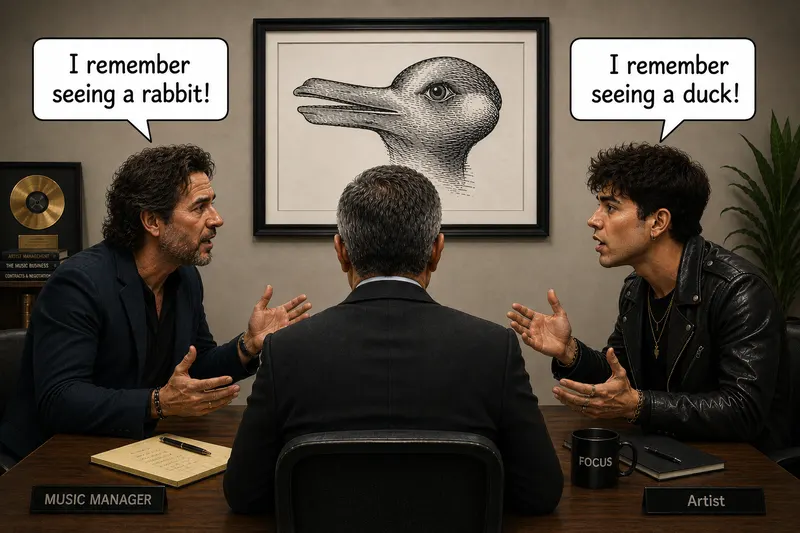
A few years ago, back when I was still straddling both worlds, I was working with a recording artist I’ll call Maya. She’d spent over a decade building something real: two self-funded records, a genuine following, the kind of credibility you can’t manufacture. A mid-size label had finally come calling. It should have been a good moment.
Instead, she’d been in negotiations for three months and was about to walk.
The sticking point was the advance. She wanted $200,000. They were offering $75,000. Both sides had lawyers. Both sides were exhausted. Both sides had decided the other was negotiating in bad faith.
I asked her why the number mattered so much.
“Because that’s what I’m worth,” she said.
I’d heard that before. I’d probably said something like it myself, once or twice, in a different context. So I didn’t argue with it. I just kept asking.
Why are you in this dispute?
This is always the first conversation; the facts, the timeline, who said what and when. It matters. You can’t skip it. But if you’re not careful, you start treating this layer like it’s the whole thing, and then you’re negotiating the wrong problem with a lot of conviction.
The facts of Maya’s situation were clean enough. Offer on the table. Gap between positions. Stalled talks. I could have spent the next several sessions working the number, splitting the difference, structuring escalators, finding creative deal points to bridge the gap. A lot of negotiations never go deeper than this. They just grind until someone gives.
That wasn’t going to work here. I could feel it.
Why did it matter?
I asked her what $200,000 would actually change - practically - in her life and her career.
She thought about it longer than I expected. “I’d probably put most of it back into the record,” she finally said.
So the money wasn’t really the point. Or it wasn’t only the point. The number had taken on a weight that had nothing to do with her recording budget.
Twelve years is a long time to want something. Twelve years of watching the industry reward people who, from where she was standing, deserved it less. The advance had become a kind of verdict. A $75,000 offer wasn’t just a financial position. It was, to her, a $75,000 judgement of everything she’d built.
I understood that more than she knew. I’d watched artists I worked with get passed over, underpaid, managed badly, dropped. I’d seen what that accumulated weight did to people. It didn’t make her wrong to feel it. It just meant the number was carrying something it was never designed to carry.
Why did you need what you needed?
There’s a distinction in mediation between positions and needs. A position is what you’re asking for. A need is why you’re asking for it. They often sound like the same thing. They almost never are.
Maya’s position was $200,000. I kept asking why until she said something that surprised her, I think, as much as it surprised me: “I just want someone who’s actually going to show up for me.”
She didn’t need $200,000. She needed to know this label wasn’t going to take her record, run one press cycle, and move on to the next thing. She needed a partner. The advance had become her way of testing for that. A kind of “brown M&M” as if a higher number meant higher commitment. Not unreasonable. But not realistic.
Why does this carry the weight it does?
This is the layer most negotiations never reach, and it’s the one that explains why so many of them fail.
Disputes accumulate history. By the time someone is sitting across a table from you, they’re not just negotiating the thing in front of them. They’re negotiating with every prior version of this situation they’ve ever been in. Every time they were overlooked. Every time they trusted someone and got burned. Every time they took less than they deserved because they didn’t know they could ask for more.
You can’t split the difference on that. You have to name it first.
I reflected back to Maya what I was hearing (not her position) and what seemed to be underneath it. She got quiet. But she didn’t fall apart. She just stopped and reevaluate her feelings and her ask.
Why is this hard to leave behind?
Here’s the part that still stays with me.
When we eventually got everyone together, it turned out the label had been reading the whole negotiation wrong. They thought she didn’t trust them. They’d been getting more defensive with each round, which she read as indifference, which made her dig in harder. Nobody had said the actual thing out loud.
We got to a deal. It was a smaller advance than Maya originally wanted. But it had the real commitments around promotional support and A&R involvement that she wanted and these were written into the contract. She signed happily. The label got an artist who was genuinely in.
I keep thinking about this: they were three months in before anyone asked the right question. Three months of lawyers and legal fees and deteriorating goodwill, all because the conversation stayed on the surface of the thing instead of going anywhere near the center of it.
I don’t know if I would have asked those questions thirty years ago. I was pretty focused on the deal.
The Five Why’s Really Works!
The Five Whys aren’t a formula. They’re a direction. Digging down instead of across. Toward what’s real instead of what’s stated.
Most disputes settle at the first or second layer. The agreement gets signed, the case closes, and everyone carries out whatever they carried in. Sometimes that’s fine. Sometimes it means the same fight surfaces six months later in a different form.
The deeper questions are uncomfortable. They take longer. They require both parties to be willing to say something true instead of something strategic.
But in all my years on both sides of the table, I’ve never once seen a conflict get smaller by staying on the surface.
Steven Corn is a mediator, a music industry veteran, and the founder of Metis Mediation Services in Rockville, MD. Details in client stories are changed to protect confidentiality. He writes about conflict, resolution, and the human territory in between.